
Bingham Restoration Resources
How Long Does It Take to Dry Out Water Damage?
Published September 4, 2026
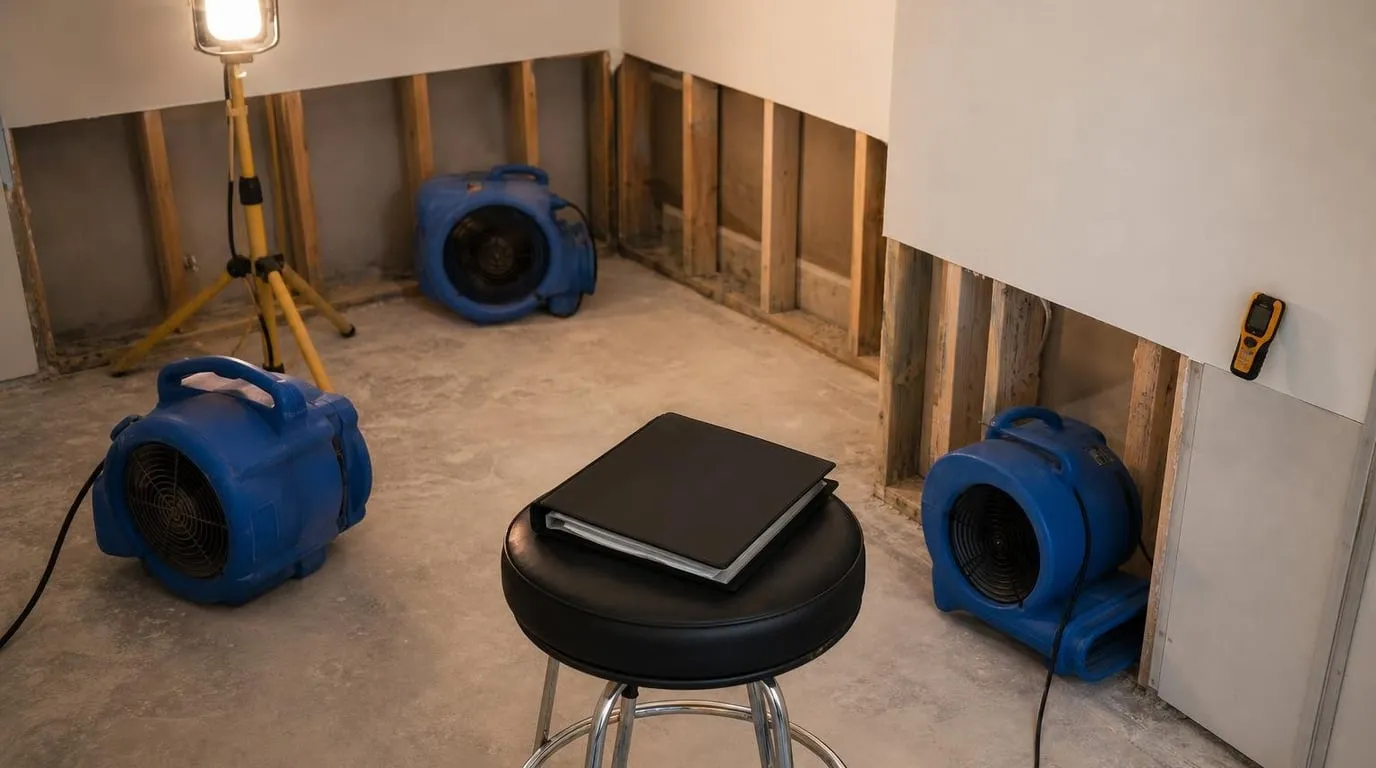
“How long until it’s dry?” gets asked within the first hour of every water loss, and the honest answer is a range with a rule attached: most homes dry in 3 to 5 days with professional equipment, and no home is dry because it looks dry. Drying ends when the meters say so.
Quick answer: Typical structural drying takes 3 to 5 days with commercial air movers and dehumidifiers running continuously. Small, fast-response clean-water losses can verify dry in 2 to 3 days. Hardwood floors, plaster, concrete, and losses that sat before response commonly need 7 to 14 days. The schedule is set by moisture readings reaching dry standard, not by appearance.
Drying Time by Material
| Material | Typical drying time (professional) |
|---|---|
| Drywall (wet at base, intact) | 2–4 days |
| Carpet and pad (pad often removed) | 1–3 days |
| Framing lumber | 3–7 days |
| Subfloor (OSB/plywood) | 4–8 days |
| Hardwood flooring | 7–14 days (specialty mat systems) |
| Plaster walls | 5–10 days |
| Concrete slab | 7–14+ days |
| Insulation (fiberglass, wet) | Not dried: removed and replaced |
Layered assemblies run longest: tile over subfloor, hardwood over sleepers, built-up plaster. Water gets in faster than it gets out.
What Sets the Clock
Response time dominates. Water extracted within hours never saturates deep layers; water that sat a weekend has loaded framing and subfloor, and every additional day of absorption adds roughly its own length in drying. Slow response also triggers the humidity cascade described in secondary water damage and pushes against the 48-hour mold window.
Extraction quality is the multiplier. Every gallon physically extracted is a gallon that never has to evaporate. Professional truck-mounted extraction shortens drying more than any amount of added fans.
Equipment does the rest. Air movers keep evaporating surfaces from stalling; commercial dehumidifiers pull that moisture out of the building; the pairing runs 24/7 because humidity rebounds the moment it stops. Household fans and a rented dehumidifier move a fraction of the water in multiples of the time, the gap explained in the structural drying process.
”Dry” Is a Measurement
Professional drying runs on numbers: technicians establish a dry standard from unaffected materials in the same house, then log daily readings on every affected surface until they match. That log is also your insurance evidence, proof the loss was mitigated properly, which matters enormously if mold or claim questions surface later.
The failure mode to avoid is declaring victory by touch. Drywall reads dry on the surface days before its core does; subfloor under vinyl can hold moisture for a month. Structures closed up wet grow mold behind new paint, and the reopened project costs multiples of the drying that was skipped.
Related Services
Bingham Restoration dries to documented standard with daily logged readings your insurer accepts, typically arriving within 48 minutes of your call. See our water damage restoration services or call 520-FLOODED.
Frequently Asked Questions
How long does it take to dry out water damage?
With professional equipment, most residential losses dry in 3 to 5 days. Small clean-water events can finish in 2 to 3 days; large losses, dense materials like concrete and hardwood, or delayed responses can run 1 to 2 weeks.
Can a room dry out on its own?
Surfaces will look dry within days, but water absorbed into drywall, framing, subfloor, and insulation stays for weeks without mechanical drying — long past the 48-hour mold window. 'Feels dry' and 'is dry' are different claims.
What factors make drying take longer?
How long water sat before response, water volume, dense or layered materials (hardwood, plaster, tile over subfloor, concrete), insulation in cavities, high ambient humidity, and cool temperatures.
How do professionals know when a structure is dry?
Moisture meters compared against a dry standard, meaning readings from unaffected materials in the same home, logged daily until affected materials match. Drying ends at verified numbers, not at a calendar date.
Does drying equipment really need to run 24/7?
Yes. Drying is a continuous physical process; shutting equipment down overnight lets humidity rebound and materials re-absorb moisture, extending total time and cost.
Need Emergency Restoration Right Now?
Our crews arrive in 48 minutes on average and bill your insurance directly.
Call 520-FLOODED