
Bingham Restoration Resources
Secondary Water Damage: The Damage After the Water
Published September 2, 2026
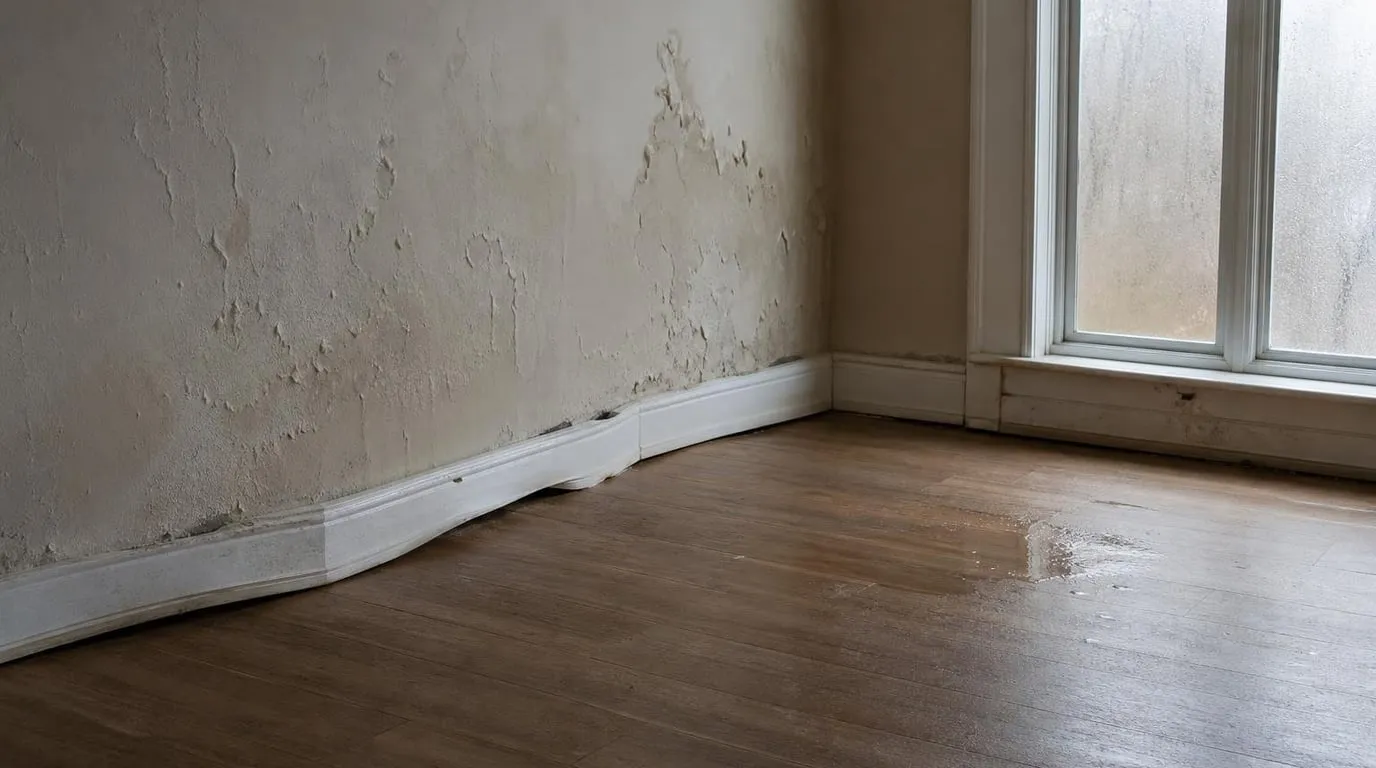
Every water loss is really two events. The first is the flood you can see: the burst pipe, the standing water. The second unfolds invisibly over the following days, as the water you extracted keeps working on the house from the air. Restoration professionals call it secondary damage, and on slow-response losses it regularly outgrows the original.
Quick answer: Secondary water damage is everything the loss causes after direct contact: humidity absorbed into wood, drywall, and furniture across the house; condensation on cool surfaces; corrosion; and mold. It begins within hours as evaporating water drives indoor humidity toward saturation, and it is largely preventable with fast extraction and commercial dehumidification.
How Water Damages Rooms It Never Reached
A hundred gallons on the floor does not stay on the floor. It evaporates, because that is what wet materials do, and the water vapor loads the indoor air. Humidity that should sit near 40% climbs past 80%, and then the whole house becomes the wet zone:
- Hygroscopic materials drink from the air. Hardwood cups, doors and trim swell, books and instruments warp, all in rooms with dry floors.
- Condensation forms on windows, ducts, toilets, and cool wall surfaces, creating new wet spots that feed the cycle.
- Metals corrode in sustained high humidity: fasteners, electronics, appliance internals.
- Mold gets everything it needs. Above roughly 60% sustained humidity, growth becomes possible on surfaces that were never wetted; above 70%, likely. The 48-hour mold window applies to the humid house, not just the wet floor.
Meanwhile, the directly wetted materials keep feeding the process. Drywall wicks upward, water migrates under flooring into adjacent rooms, and saturated assemblies release moisture for days, the hidden movement mapped in our hidden water damage guide.
Primary vs. Secondary at a Glance
| Primary damage | Secondary damage | |
|---|---|---|
| Cause | Direct water contact | Humidity, migration, condensation, mold |
| Timing | Immediate | Hours to weeks after |
| Location | The wet zone | Anywhere air circulates |
| Preventable? | Rarely, once the loss occurs | Largely, with fast professional drying |
That last cell is the entire economics of emergency response. Primary damage is fixed at the moment of loss; secondary damage is a function of response time and drying quality.
Why Dehumidification Is the Hero
Fans alone make secondary damage worse: they accelerate evaporation, moving water from materials into air faster, without removing it from the building. Professional drying pairs air movement with commercial dehumidifiers sized to the loss, so moisture leaves materials and then leaves the house, with humidity and material readings logged daily until dry standard. The full methodology is described in the structural drying process.
The insurance angle mirrors the physics: secondary damage flowing from a promptly mitigated covered loss is covered; secondary damage flowing from a week of box fans invites a failure-to-mitigate argument. Fast, documented response protects both the structure and the claim, the same logic covered in filing a water damage claim.
Related Services
Bingham Restoration’s 48-minute average response exists to win the secondary-damage race. See our water damage restoration services or call 520-FLOODED at the first sign of a loss.
Frequently Asked Questions
What is secondary water damage?
Damage caused not by direct water contact but by its aftermath: elevated humidity, absorbed moisture migration, condensation, and mold. It develops hours to weeks after the original loss and often affects rooms the water never reached.
What are examples of secondary damage?
Cupped hardwood in the next room, peeling paint and swollen trim from humidity, mold growth, rusted fasteners and appliance corrosion, warped doors, and delaminating furniture — all without direct wetting.
How fast does secondary damage start?
Within hours. A significant water loss can push indoor humidity above 80 percent quickly, and moisture-sensitive materials begin absorbing airborne water immediately. Mold follows within 48 hours.
Does insurance cover secondary water damage?
Generally yes when it flows from a covered loss that was promptly mitigated. Slow response weakens that position, since carriers can attribute the secondary damage to failure to mitigate.
How is secondary damage prevented?
Speed and dehumidification. Fast extraction plus commercial dehumidifiers capping indoor humidity prevents the airborne-moisture cascade. This is the core argument for professional drying over fans.
Need Emergency Restoration Right Now?
Our crews arrive in 48 minutes on average and bill your insurance directly.
Call 520-FLOODED