
Bingham Restoration Resources
Water Damage in an Apartment: Who Pays for What?
Published August 27, 2026
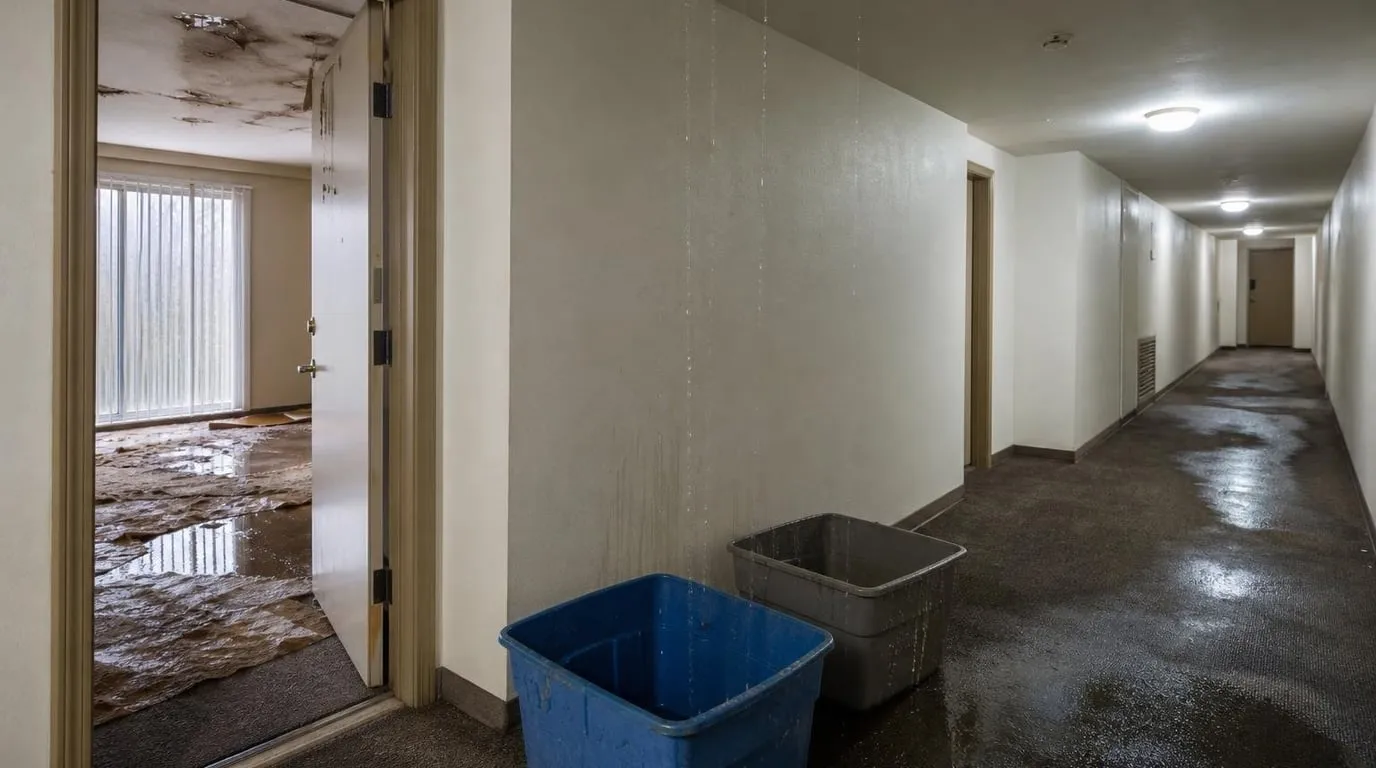
Apartment water damage turns one leak into a three-party negotiation: the tenant whose belongings are soaked, the landlord who owns the walls, and often a neighbor whose washing machine started it all. Knowing which policy covers which loss, before the finger-pointing starts, saves weeks.
Quick answer: The landlord’s insurance covers the building; your renters insurance covers your belongings and, usually, your temporary housing; and the party whose negligence caused the water may end up reimbursing both through liability coverage. Your immediate jobs as a tenant: protect what you can, give the landlord written notice, document everything, and open your renters claim.
The Coverage Map
| Damage | Whose policy pays first |
|---|---|
| Walls, ceilings, flooring, cabinets | Landlord’s property policy |
| Your furniture, electronics, clothing | Your renters policy |
| Hotel/temporary housing while unit is unlivable | Your renters policy (loss of use) |
| Neighbor’s unit damaged by your overflow | Their policies first; your liability coverage may reimburse |
| Your unit damaged by a neighbor’s leak | Your renters policy first; subrogation follows the negligence |
The recurring surprise: the landlord’s insurance does not cover tenant belongings, even when the building’s plumbing caused the loss. Absent landlord negligence, uninsured tenants absorb their own contents losses. Renters insurance is cheap precisely because this scenario is common.
Tenant Playbook, In Order
- Protect yourself and your things. Move belongings, kill power strips in wet areas, contain what you can.
- Notify management in writing immediately: text or email, not just a phone call. Written notice timestamps the landlord’s duty to respond, which matters enormously if mold or a dispute develops later.
- Document like an owner. Photos and video of the source (if visible), the water, and every affected item. The same evidence discipline described in filing a water damage claim applies to renters.
- Open your renters claim the same day if belongings are damaged or the unit may be unlivable.
- Push for real mitigation. The landlord’s restoration response should include extraction and verified structural drying, not a fan in the hallway. Moisture left in shared walls becomes everyone’s mold problem, and tenants breathe the result.
- Keep receipts for anything you spend on cleanup supplies, laundry, and hotel nights, for the loss-of-use claim.
Where Negligence Changes Everything
Liability follows the cause. A tenant who left the tub running answers for the neighbor’s ceiling; a landlord who ignored a reported leak for three weeks answers for the tenant’s ruined furniture; a neighbor’s failed washer hose routes through their liability coverage. In practice, each insurer pays its own policyholder first, then the companies fight it out through subrogation. Your written notices, dated photos, and repair requests are the evidence that fight runs on.
Habitability is the tenant’s other lever: most states require landlords to maintain livable conditions, and documented unaddressed water intrusion or mold can support rent remedies or lease termination. Local law varies; document first, then get advice.
Related Services
Bingham Restoration works apartment and multifamily losses for owners, managers, and tenants — extraction, drying with documented moisture logs, and unit rebuild. See our water damage restoration services or call 520-FLOODED.
Frequently Asked Questions
Who pays when water damages my apartment?
The building owner's insurance covers the structure: walls, floors, ceilings, and built-ins. Your belongings are covered only by your own renters insurance. Whoever caused the leak (you, a neighbor, or the landlord) may ultimately bear the cost through liability.
My upstairs neighbor flooded my apartment. Who covers my stuff?
Your renters policy pays you first, then your insurer may pursue the neighbor's liability coverage. Without renters insurance you would have to claim against the neighbor's policy directly or sue, which is slower and less certain.
Is the landlord responsible for water damage to my belongings?
Generally only if their negligence caused it, such as an ignored reported leak or failed maintenance. Building-caused damage without negligence typically leaves your contents to your own renters policy.
What should a tenant do first when water is coming in?
Protect people and belongings, notify the landlord or management in writing immediately, and document everything with photos and video. Written notice starts the landlord's legal duty to act.
Does renters insurance cover hotel costs if my unit is unlivable?
Most policies include loss-of-use coverage that pays for temporary housing when a covered loss makes the unit uninhabitable. Check the limit; it is one of the most valuable parts of the policy.
Need Emergency Restoration Right Now?
Our crews arrive in 48 minutes on average and bill your insurance directly.
Call 520-FLOODED