
Bingham Restoration Resources
Water Mitigation vs. Restoration: What Each Covers
Published August 30, 2026
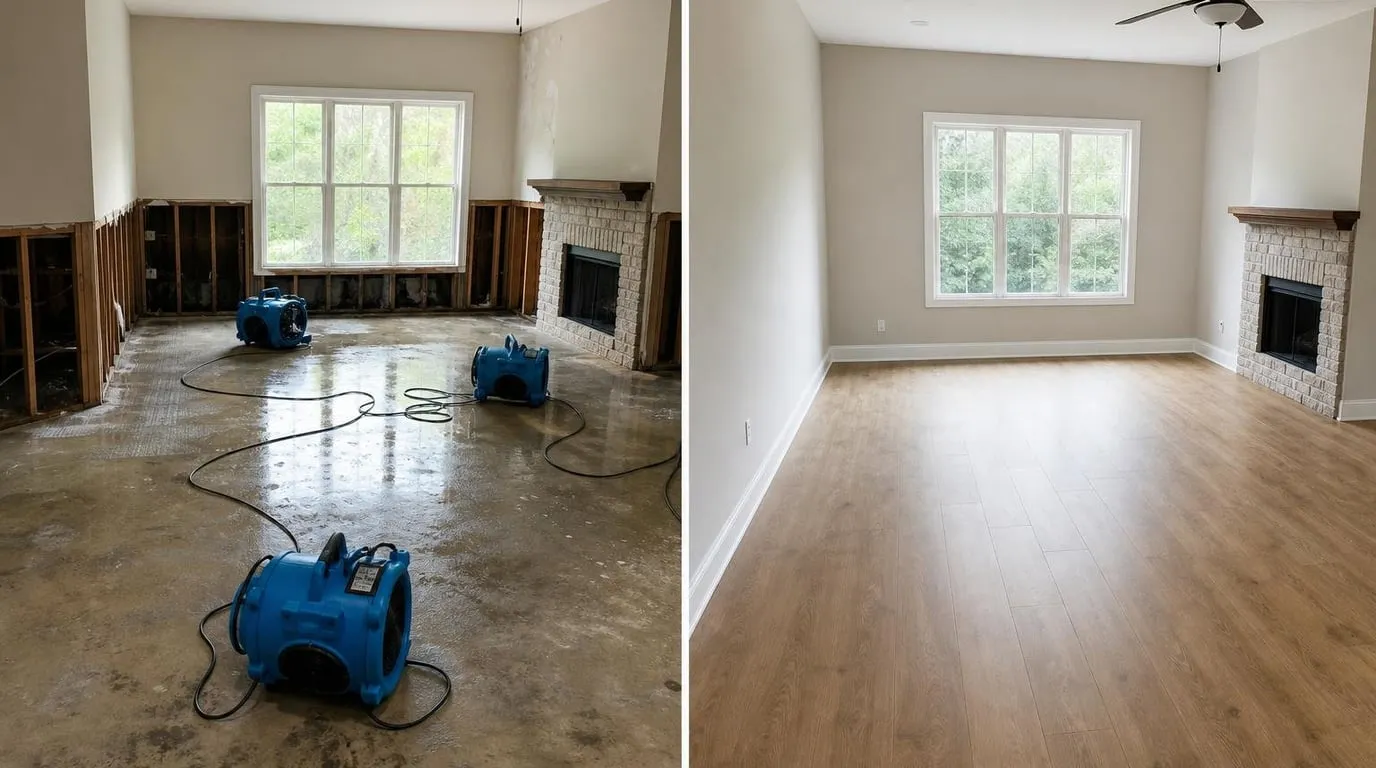
“Mitigation” and “restoration” get used interchangeably by homeowners and precisely by insurers, and the gap causes real confusion mid-claim: why are there two estimates? Why did the crew leave after the equipment came out? Why is there a hole in my wall and no one scheduled to fix it yet? The two words describe two different projects.
Quick answer: Water mitigation is the emergency phase: stop the source, extract the water, remove unsalvageable materials, dry the structure. Water restoration is the rebuild phase: repair and refinish everything back to pre-loss condition. Mitigation happens in the first hours and days and cannot wait; restoration is scoped after drying and scheduled like construction, because it is construction.
Mitigation: Stop the Loss
Mitigation exists to make the damage stop getting worse. Its clock is measured in hours:
- Source control and safety: water off, power secured
- Extraction of standing water
- Controlled demolition: flood cuts, saturated pad and insulation out, unsalvageable materials removed
- Structural drying: air movers and dehumidifiers with daily moisture readings until framing and drywall hit dry standard, per the structural drying process
- Antimicrobial treatment where the water category requires it
- Documentation throughout: the record the entire claim runs on
Your policy obligates prompt mitigation (“duty to protect the property”), which is why carriers expect it to start before an adjuster ever visits. Delay converts savable materials into demolition scope and invites the mold complication described in our 48-hour guide.
Restoration: Reverse the Loss
Restoration begins where drying verification ends: rebuilding what mitigation removed and repairing what water damaged. Drywall and insulation, flooring, cabinetry, trim, paint, and finish work — construction, with construction’s scheduling, materials lead times, and craftsmanship variance. The scope is negotiated with the carrier from the post-mitigation state of the structure, which is why a thorough mitigation file (photos, moisture logs, demolition inventory) directly determines how completely restoration gets funded.
Why the Distinction Matters to You
| Mitigation | Restoration | |
|---|---|---|
| Urgency | Hours | Weeks |
| Insurance handling | Expected immediately; invoiced as emergency services | Estimated, negotiated, then authorized |
| Goal | Minimize the loss | Reverse the loss |
| Ends with | Dry-standard verification | Pre-loss condition |
Two practical implications. First, never wait for claim approval to mitigate, because that delay damages both house and claim. Second, ask any company you hire whether they carry the project through restoration. Mitigation-only outfits do good emergency work and then hand you, mid-claim, the job of finding a rebuild contractor who must adopt someone else’s documentation.
The same two-phase logic appears across loss types, and the fire version is covered in our fire claim guide. Its glossary cousin is addressed in restoration vs. remediation.
Related Services
Bingham Restoration is a full-cycle firm: 48-minute average emergency response through final paint, with one documentation chain and direct insurance billing. See our water damage restoration services or call 520-FLOODED.
Frequently Asked Questions
What is the difference between water mitigation and water restoration?
Mitigation stops the damage: extraction, demolition of unsalvageable materials, and structural drying. Restoration reverses it: rebuild, drywall, flooring, paint, and finishing back to pre-loss condition. Mitigation is urgent; restoration is scheduled.
Why do insurance companies separate mitigation from restoration?
They are approved, scoped, and paid as separate phases. Mitigation is expected immediately under your duty to prevent further damage, often before an adjuster visits; restoration is estimated and authorized after the structure is dry and the full scope is known.
Can one company do both mitigation and restoration?
Yes, and full-service firms streamline the claim by keeping documentation continuous from extraction through rebuild. Some companies only mitigate, which leaves you finding a rebuild contractor mid-claim.
How long does each phase take?
Mitigation typically runs 3 to 5 days, dominated by drying time. Restoration runs from a few days (paint and trim) to several weeks (flooring, cabinetry, multi-room rebuild), scheduled after drying verification.
Do I need restoration if mitigation saved most materials?
Often only lightly. Good mitigation minimizes the rebuild; that is its economic point. But flood cuts, removed flooring, and demolished materials always imply some restoration scope.
Need Emergency Restoration Right Now?
Our crews arrive in 48 minutes on average and bill your insurance directly.
Call 520-FLOODED