
Bingham Restoration Resources
What Is a Flood Cut? Why Crews Remove Two Feet of Drywall
Published September 1, 2026
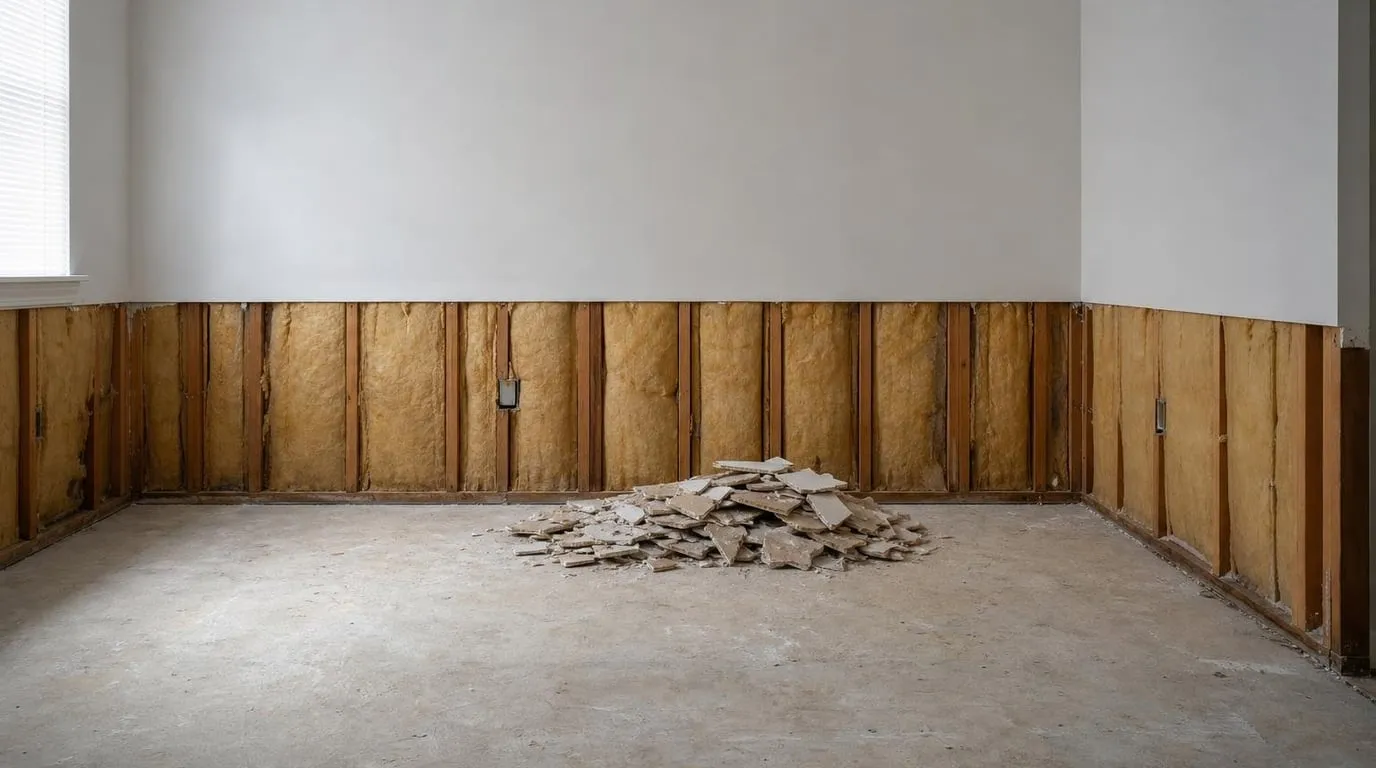
Homeowners meet the flood cut at an emotional moment: a crew arrives to save the house and starts removing the bottom two feet of every wall in the room. It looks like demolition. It is actually triage, and it is frequently the reason the rest of the wall, and the framing behind it, survives.
Quick answer: A flood cut is the removal of the lower section of drywall, usually to a height of 2 or 4 feet, along water-damaged walls. It exposes the wall cavity so framing can dry, removes drywall and insulation that cannot be saved, and stops mold from establishing in a sealed wet space. Cuts land at 2 or 4 feet because drywall comes in 4-foot widths, making the repair seam clean.
Why Open the Wall At All?
Water inside a wall cavity has no exit. Drywall wicks water upward at roughly an inch per hour during exposure; fiberglass insulation holds water like a sponge against the framing; and a closed, dark, damp cavity is a mold incubator on the standard 48-hour schedule. From outside, the wall may look merely stained while the cavity stays saturated for weeks.
The flood cut solves all of it at once: saturated drywall and insulation leave the building, airflow reaches the framing, and moisture readings can verify actual dryness instead of surface dryness, a difference detailed in our structural drying guide.
When Crews Cut vs. Dry in Place
| Situation | Approach |
|---|---|
| Clean (Category 1) water, caught within hours, no insulation in wall | Often dried in place with cavity drying equipment |
| Clean water but saturated insulation | Flood cut: wet insulation cannot be dried in place |
| Gray or black water (Category 2–3) contact | Flood cut: contaminated porous materials must go |
| Water sat for days; drywall swollen, soft, or bowed | Flood cut: the material is unsalvageable |
| Waterline above 2 feet | Cut at 4 feet |
Category drives much of this decision; sewage-contact drywall is never dried in place, as explained in water damage categories. The cut height follows the physics (above the waterline plus wicking margin) and the geometry of a 4-foot drywall sheet, which is why you see cuts at exactly 2 or 4 feet rather than at the stain line.
What a Proper Flood Cut Looks Like
- Moisture mapping first. Meters and thermal imaging define which walls actually need opening; cutting is scoped by data, not by eye.
- Utilities respected: cuts made shallow and carefully around wiring and plumbing.
- Clean, straight, level lines: the repair quality is determined here.
- Wet insulation bagged and out; cavity HEPA-vacuumed and treated as category requires.
- Drying equipment set, readings logged daily until framing hits dry standard.
- Photos throughout: an opened cavity is also claim evidence of hidden damage.
One caution for older homes: drywall systems, joint compounds, and textures installed before the mid-1980s can contain asbestos, which makes unplanned DIY cutting a hazard. Testing first is standard practice. See environmental testing before restoration.
After drying verification, restoration follows: new insulation, drywall to the cut line, tape, texture, paint. Done right, the seam disappears — and the wall above it never knew there was a flood.
Related Services
Bingham Restoration scopes flood cuts by moisture data, dries to documented standard, and rebuilds the walls seamlessly. See our water damage restoration services or call 520-FLOODED.
Frequently Asked Questions
What is a flood cut in water damage restoration?
A horizontal cut removing the lower portion of drywall, typically 2 or 4 feet above the floor, along walls that took on water. It opens the wall cavity for drying, removes contaminated or unsalvageable material, and creates a clean line for repair.
Why cut at 2 feet or 4 feet exactly?
Drywall sheets are 4 feet wide, so cuts at 2 or 4 feet let replacement pieces install with one clean seam. The height is chosen above the visible waterline plus a margin for wicking.
Is a flood cut always necessary after water damage?
No. Clean water caught quickly can often be dried in place with cavity-drying equipment. Flood cuts become necessary with contaminated water, saturated insulation, prolonged exposure, or drywall that has lost integrity.
Does insurance cover flood cuts and the repair?
Yes, on covered losses. The cut is standard mitigation and the drywall replacement is part of restoration scope. Photos of the opened cavity also document hidden damage the claim should include.
Can I do a flood cut myself?
Physically, yes, with care around wiring and plumbing. But the decision of where and whether to cut should follow moisture readings and water category, and pre-1980s homes need asbestos consideration before cutting.
Need Emergency Restoration Right Now?
Our crews arrive in 48 minutes on average and bill your insurance directly.
Call 520-FLOODED