
Bingham Restoration Resources
Asbestos Testing Before Water Damage Repairs
Published November 16, 2026
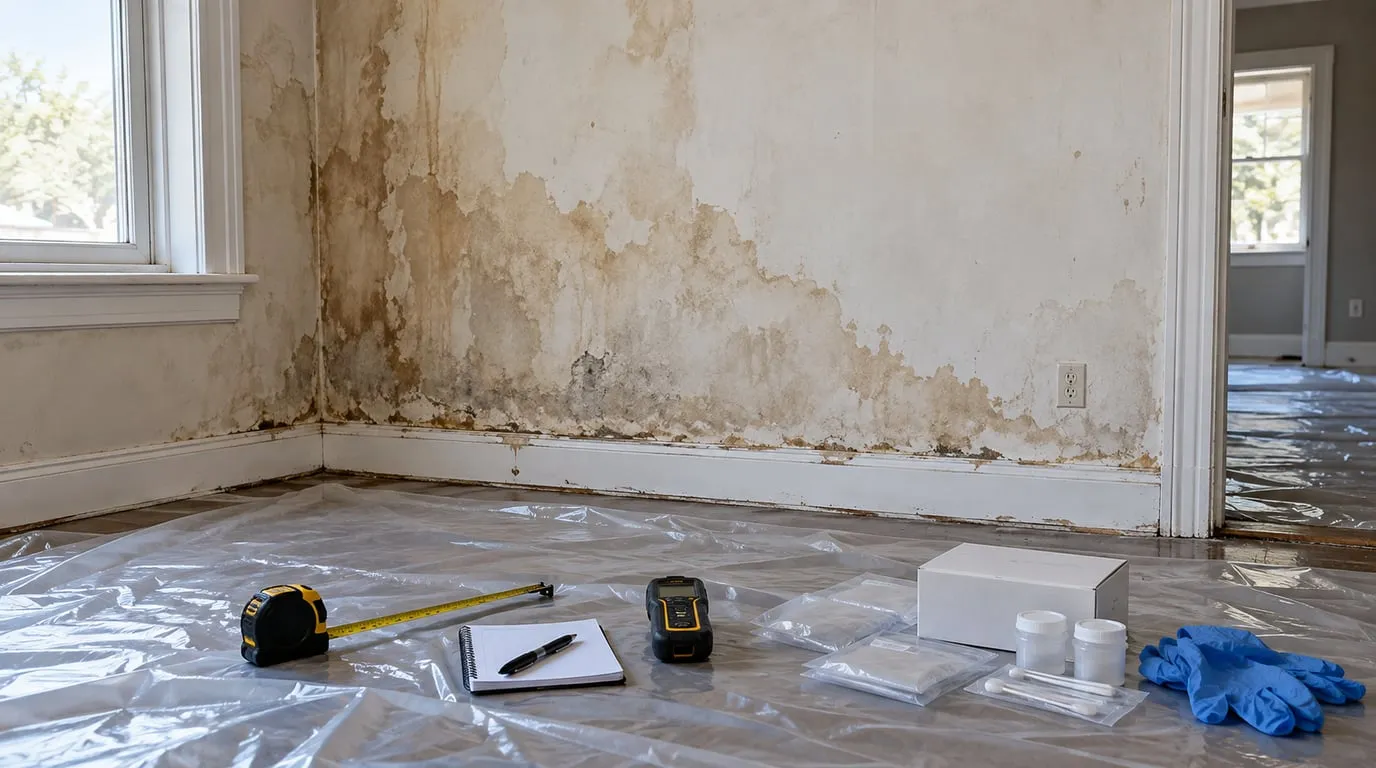
Quick answer: If water damage repairs will cut, scrape, or remove materials in an older home, have the suspect materials tested for asbestos first. You cannot identify asbestos by looking at it. A trained inspector takes small samples from each material in the planned work area, and a laboratory analyzes them. Emergency water extraction and dehumidification can start while you wait for results.
Why does asbestos come up during water damage repairs?
Asbestos that is intact and left alone releases few fibers. The risk comes from disturbing it, and water damage repairs disturb a lot: wet drywall is cut out, flooring is pulled up, ceilings are opened, and pipe insulation is stripped back to reach a leak.
The EPA advises leaving asbestos material that is in good condition alone, and having damaged material or material that will be disturbed handled by trained professionals. Taking a chip yourself to “just check” is itself a disturbance.
Which materials should be tested first?
These are the ones a water loss most often reaches.
| Material | Where it turns up | What disturbs it |
|---|---|---|
| Joint compound and wall texture | Seams, corners, and skim coats on older drywall | Flood cuts, sanding, patching |
| Textured ceilings | Popcorn and sprayed finishes | Scraping or removing a wet, sagging ceiling |
| Resilient floor tile and adhesive | Older vinyl tile and the black adhesive under it, often hidden beneath newer flooring | Pulling up wet flooring, scraping adhesive |
| Sheet vinyl backing | Kitchens, baths, and laundry rooms | Tearing out water-damaged vinyl |
| Pipe insulation | White or gray wrap on older heating and hot water pipes | Repairing a leaking fitting |
| Vermiculite insulation | Loose gray-brown granules in attics | Removing wet insulation after a roof leak |
Three points catch homeowners out:
- A wall is several materials. The drywall board, the joint compound, the texture, and any later patch can each be different. A clean result on the board does not clear the compound.
- Floors come in layers. New flooring is often laid straight over old tile. Tell the inspector which layers will actually be removed, not only which one is visible. Tile size and adhesive color do not settle the question.
- Pipe insulation is fragile when wet. A leak can turn old wrap into debris around the fitting. Do not unwrap the pipe or vacuum the debris. Leave it for assessment.
What does the inspector need from you?
The more precisely the work area is defined, the more useful the report. Give the inspector:
- the moisture map or the list of wet areas
- where the crew plans to cut, and how high
- which floor layers are coming up
- where the plumber needs access
- anything you know about past additions, repairs, or remodels
A good report ties each result to a location. It should list the sample locations by room, describe each distinct layer, give the lab findings, and state what was not assessed. Hand it to every contractor who will work in the area. If demolition uncovers a texture, patch, or layer that was not in the report, stop and have it sampled.
Can drying start before the results come back?
Yes. The work splits into steps that can go ahead and steps that wait.
Can go ahead: stopping the source, extracting standing water, removing wet contents, setting dehumidifiers, and closing off the affected rooms.
Waits for results: flood cuts, ceiling removal, flooring tear-out, and anything that sands or scrapes a suspect surface. Crews should also avoid aiming high-velocity air movers at damaged suspect material.
Ask the crew which operations fall on each side of that line before work begins, and who updates the plan if another layer turns up.
Does a positive result mean everything has to come out?
No. The result changes how the work is done, not necessarily how much is removed.
- Material that tested positive and is inside the demolition area has to be removed under asbestos controls: containment, wet methods, HEPA filtration, and regulated disposal.
- Material that tested positive but is intact and outside the work area can often stay. Record where it is so future repairs do not disturb it by accident.
Our guides to asbestos abatement cost and demolition and abatement cover what the removal itself involves. Before the area is rebuilt, keep the lab report, the abatement and waste records, and the drying readings together. The next contractor, and a future buyer, will want to see them.
What do the rules require?
Requirements come from several layers, and local rules are frequently stricter than federal ones.
- Federal. EPA rules require an inspection before renovation or demolition of most commercial and multi-unit buildings. Worker safety rules also treat pipe and boiler insulation and sprayed or troweled surfacing in buildings built before 1981 as presumed to contain asbestos until testing shows otherwise.
- State and local. Regional air quality agencies set their own survey and notification rules, and some apply them to single-family homes.
Two examples from areas we serve:
- Los Angeles. The South Coast Air Quality Management District’s Rule 1403 sets survey, notification, and work practice requirements for building renovation and demolition. Older Los Angeles homes often have several generations of finishes layered over each other, so tell the inspector about every planned ceiling opening, floor removal, and wall cut. Local help is available through our Los Angeles service area.
- Seattle. The Puget Sound Clean Air Agency requires asbestos to be identified before a renovation disturbs materials that may contain it, and requires notification before removal or demolition. Pipe repairs in older Seattle houses often need access beside wrapped pipe insulation or through older ceilings, and floor removal can expose old adhesive. Local help is available through our Seattle service area.
Rules change, so confirm the current requirement with the local agency or your contractor before work starts. We also have city guides for asbestos testing in Phoenix and asbestos testing in Dallas.
Getting help
Bingham Restoration is AHERA certified and provides environmental testing for asbestos, mold, and lead alongside demolition and abatement, so testing, drying, and removal are planned as one job. Call 520-FLOODED (520-356-6333) any time.
Frequently Asked Questions
How long do asbestos test results take?
Standard laboratory turnaround is usually a few business days, and most labs offer rush service that returns results in about a day. Ask about turnaround when the samples are collected, because the answer sets how soon demolition can start.
Does my house need asbestos testing if it was built after 1980?
The risk drops in newer homes but does not disappear on a fixed date. Some asbestos-containing products stayed in the supply chain and in contractors' stock for years. Many state and local rules also require a survey before renovation or demolition regardless of the building's age, so check the requirement where you live.
Will testing delay drying after a leak?
It should not delay the urgent work. Stopping the water, extracting it, and setting up dehumidification can all begin right away. Testing only holds up the steps that cut, scrape, or remove suspect materials.
Who pays for asbestos testing during a water damage claim?
It depends on the policy. Testing needed to carry out a covered repair is often included in the claim, but coverage for abatement itself varies and may have limits. Ask your adjuster before the work is scheduled and keep the lab report with your claim records.
If one wall tests negative, is the rest of the room clear?
No. A result applies to the material that was sampled. A different texture, a patch, or a later repair is a different material and needs its own sample.
Need Emergency Restoration Right Now?
Our crews arrive in 48 minutes on average and bill your insurance directly.
Call 520-FLOODED