
Bingham Restoration Resources
Nashville Fire Damage: When Humidity Complicates Recovery
Published July 31, 2026
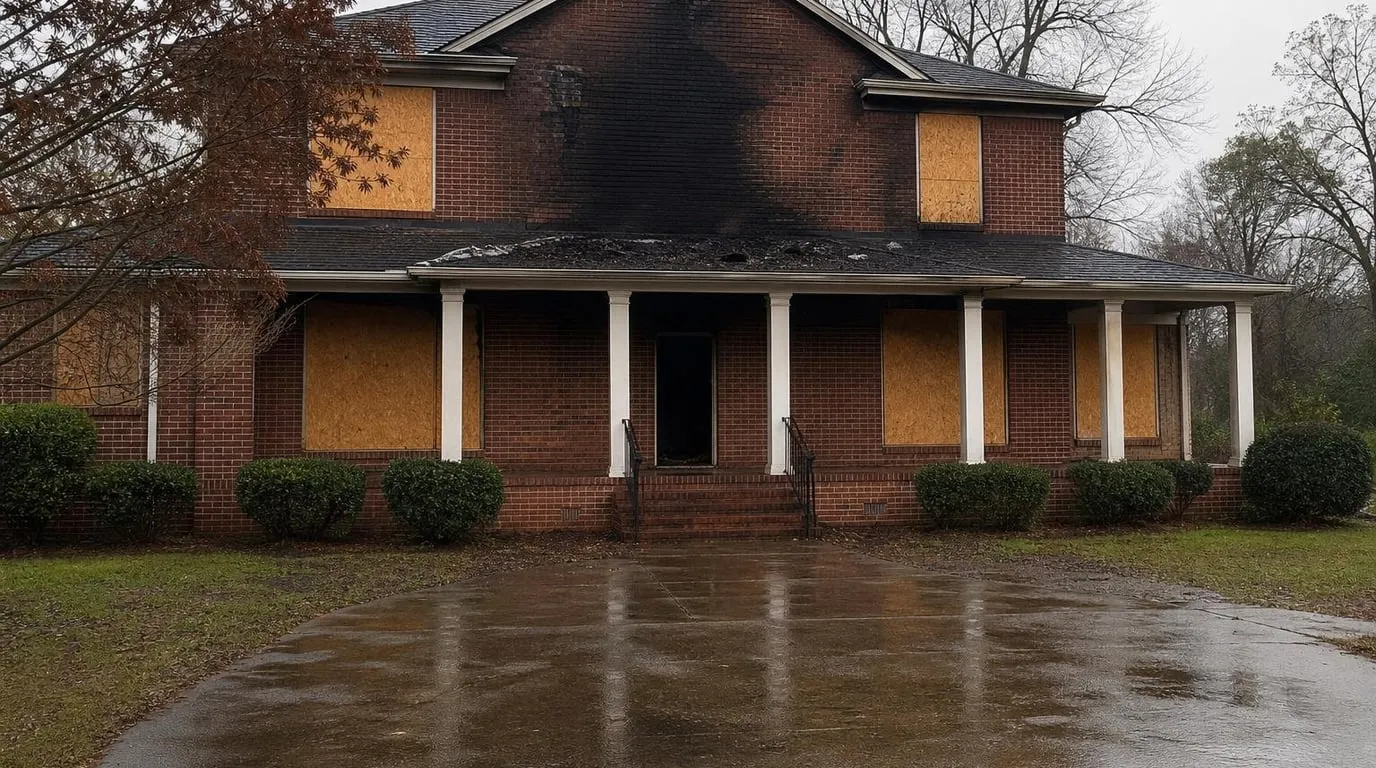
A house fire in Nashville is never just a fire loss. The suppression water that saved the structure meets Middle Tennessee humidity, and within days the same house is fighting a moisture problem inside fire-damaged walls. Managing both at once is what competent local restoration looks like.
Quick answer: Fire restoration in Nashville follows the standard sequence (board-up, suppression-water drying, soot and smoke removal, deodorization, rebuild), but humidity raises the stakes on the water phase. Wet, opened, unconditioned structures grow mold quickly here, so aggressive drying and dehumidification begin immediately, and the smoke odor scope accounts for humid-air re-release.
Why Humidity Changes Fire Recovery
Suppression water lingers. Thousands of gallons may have entered the structure, and Nashville’s ambient humidity gives that moisture nowhere to go. Without commercial dehumidification, wall cavities and subfloors stay wet for weeks — long past the 48-hour mold window. Mold growing inside a fire loss complicates both the health picture and the claim, which is why our crews stage drying equipment on day one, following the same structural drying discipline as a flood loss.
Odor behaves worse. Smoke odor compounds re-release from porous materials with heat and humidity. A house that smells acceptable in a dry week blooms again in an August humidity spike. Nashville deodorization has to be thorough, with cleaning, HVAC decontamination, then fogging or hydroxyl treatment, because the climate will audit the work. The methodology is covered in smoke smell removal.
Storm season overlaps. Middle Tennessee’s severe weather can arrive while the roof is compromised. Emergency tarping is a first-day task, and any storm intrusion gets documented into the fire claim.
Nashville’s Housing Stock Considerations
- Pre-1980s homes across East Nashville, Inglewood, and older Davidson County neighborhoods may carry asbestos in plaster, duct wrap, and flooring, plus lead paint on trim. Testing precedes demolition; see why environmental testing matters.
- Brick veneers survive fire well but trap moisture behind them after suppression; drying verification includes the cavity.
- Crawlspace foundations, common regionally, collect suppression water under the house, where it feeds humidity upward. The dynamics mirror crawlspace water damage.
The Process, End to End
- Board-up, tarping, and structural assessment.
- Immediate water extraction and dehumidification.
- Soot removal matched to residue type, HVAC cleaning, deodorization.
- Contents pack-out, cleaning, and storage.
- Rebuild, with clearance verification where mold or hazardous materials were involved.
Fire is a fully covered peril on Tennessee homeowners policies, including additional living expenses while displaced. Cost ranges and claim mechanics are covered in fire damage restoration cost.
Related Services
Bingham Restoration serves Nashville and Middle Tennessee with 24/7 fire response and direct insurance billing. See our fire damage restoration services or call 520-FLOODED.
Frequently Asked Questions
How does Nashville humidity affect fire restoration?
Humidity slows the drying of suppression water, intensifies smoke odor re-release, and raises the mold risk inside fire-damaged structures. Nashville fire losses are managed as combined fire-water-humidity projects.
Can mold grow in a fire-damaged house?
Readily, especially in Middle Tennessee. Suppression water plus an unconditioned, opened-up structure in a humid climate creates growth conditions within days. Drying and dehumidification are part of proper fire response, not an afterthought.
Does insurance cover fire damage in Tennessee?
Yes, fire is a covered peril on standard Tennessee homeowners policies, including smoke damage, water used in suppression, contents, and additional living expenses.
What about older East Nashville and historic homes?
Pre-1980s homes may contain asbestos (plaster, flooring, insulation) and lead paint, both of which fire and demolition can disturb. Testing before demo protects your household and is required for regulated abatement.
How long does fire restoration take in Nashville?
Smoke-only losses often run 1 to 3 weeks. Single-room fires with house-wide smoke typically run 4 to 8 weeks including rebuild. Structural losses run months, with humidity-managed drying built into the schedule.
Need Emergency Restoration Right Now?
Our crews arrive in 48 minutes on average and bill your insurance directly.
Call 520-FLOODED