
Bingham Restoration Resources
Seattle Fire Damage Restoration: Moisture Meets Smoke
Published August 3, 2026
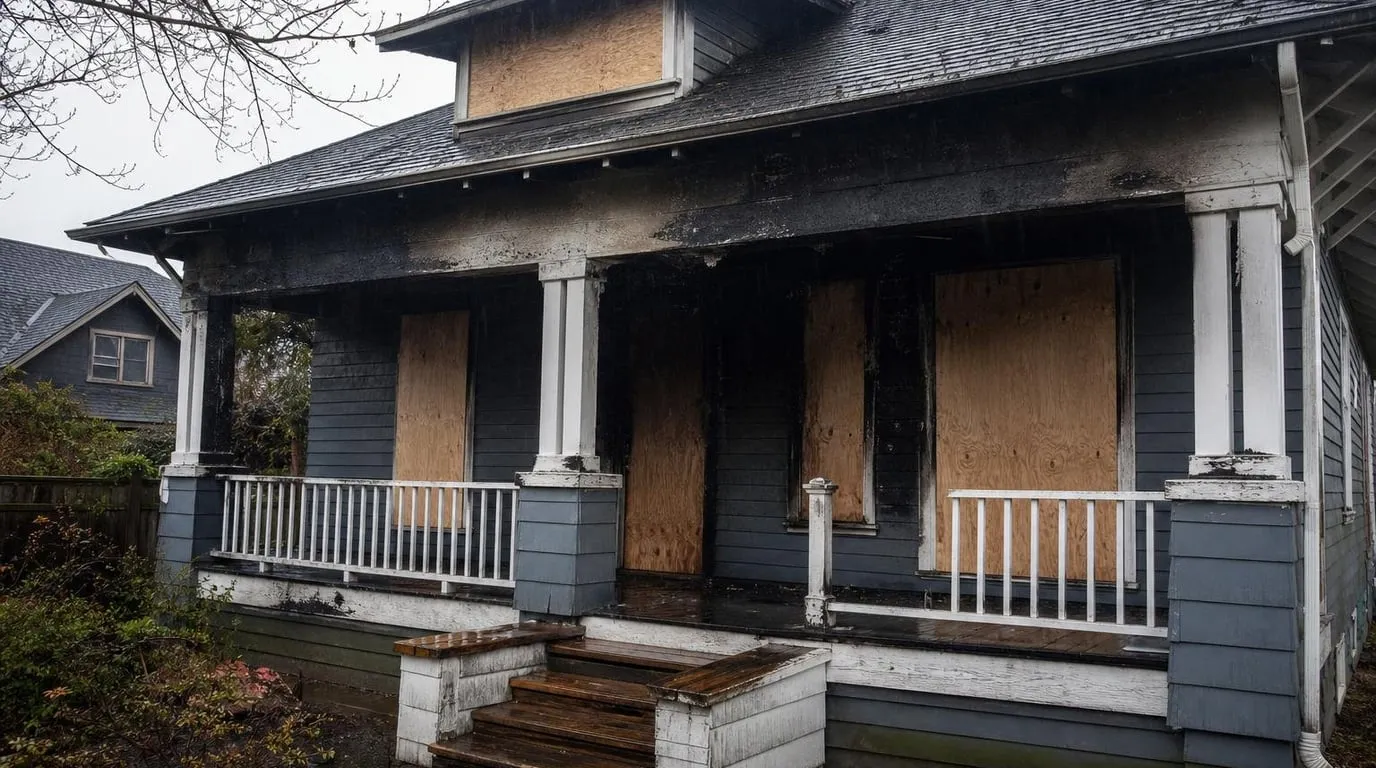
In most cities, the fire is the disaster and the weather is background. In Seattle, the weather joins the loss: rain arrives through the burned roof, ambient humidity keeps suppression water in the walls, and the mold clock starts before the ash cools.
Quick answer: Seattle fire restoration is a race to weatherproof and dry. Same-day tarping and board-up, immediate extraction and dehumidification of suppression water, then the standard smoke and soot sequence (cleaning matched to residue type, HVAC decontamination, deodorization), followed by rebuild. The climate leaves no slack in the first 72 hours.
The First 72 Hours Decide the Loss
Weatherproofing is step zero. For most of the year, rain is coming within a day or two. An unsealed roof opening lets Puget Sound weather pour into a structure already soaked by fire hoses. Emergency tarping and board-up happen the same day, before assessment paperwork.
Then the water race. Suppression water in a Seattle structure has no natural exit; 70 to 90 percent ambient humidity means nothing air-dries. Crews establish containment, run commercial dehumidifiers, and track moisture daily, per the structural drying process. Miss this window and mold establishes inside fire-damaged assemblies within 48 hours, layering a remediation project onto the fire claim. The regional mold dynamics are covered in our Seattle mold guide.
Smoke Odor in a Humid Climate
Humidity is the enemy of deodorization. Odor compounds absorbed into porous materials re-release with moisture, so a superficially cleaned Seattle home smells like smoke every damp morning — which is most mornings. The remedy is thoroughness: full residue removal matched to soot type, duct and HVAC cleaning, then hydroxyl or thermal fog treatment, and odor-blocking sealer where cleaning cannot reach. The complete methodology is in how to get smoke smell out of a house.
Craftsman Homes and Older Stock
Seattle’s beloved craftsman and midcentury housing brings two considerations:
- Hazardous materials. Pre-1980 plaster, flooring, and insulation may contain asbestos; older trim carries lead paint. Testing precedes demolition; see environmental testing before restoration.
- Irreplaceable framing. Old-growth fir framing and millwork are worth saving. Careful drying and restoration beat demolition both for cost and for the house.
Insurance Notes for Washington
Fire, smoke, and suppression water are covered perils, and mold resulting from a promptly mitigated fire loss is generally handled within the claim. Documentation of same-day mitigation protects that position. Additional living expense coverage applies while the home is uninhabitable. For scope and price context, see fire damage restoration cost.
Related Services
Bingham Restoration serves Seattle and the Puget Sound region with 24/7 fire response, standards-based drying, and direct insurance billing. See our fire damage restoration services or call 520-FLOODED.
Frequently Asked Questions
Why is fire restoration harder in Seattle's climate?
The structure rarely gets a dry day to recover. Suppression water meets 70 to 90 percent ambient humidity and frequent rain through fire-created openings, so drying requires sealed containment and commercial dehumidification rather than airflow alone.
How quickly can mold start in a fire-damaged Seattle home?
Within 48 hours, and Seattle conditions rarely slow that clock. Wet framing behind smoke-stained drywall is the classic post-fire mold site in the Puget Sound region.
Does insurance cover fire and resulting mold in Washington?
Fire, smoke, and suppression water are covered perils. Mold resulting from the fire loss is generally covered as part of that claim when mitigation was prompt, which is another reason immediate drying matters.
Do Seattle's older craftsman homes complicate restoration?
They can. Pre-1980 homes may contain asbestos in plaster, flooring, and insulation, and old-growth fir framing is worth drying and saving rather than replacing. Both argue for testing and careful demolition.
How soon should tarping happen after a Seattle fire?
Immediately, same day. With rain likely within any 48-hour window most of the year, an open roof converts a fire loss into an ongoing water intrusion within days.
Need Emergency Restoration Right Now?
Our crews arrive in 48 minutes on average and bill your insurance directly.
Call 520-FLOODED