
Bingham Restoration Resources
Kansas City Fire Damage Restoration: Four-Season Recovery
Published August 1, 2026
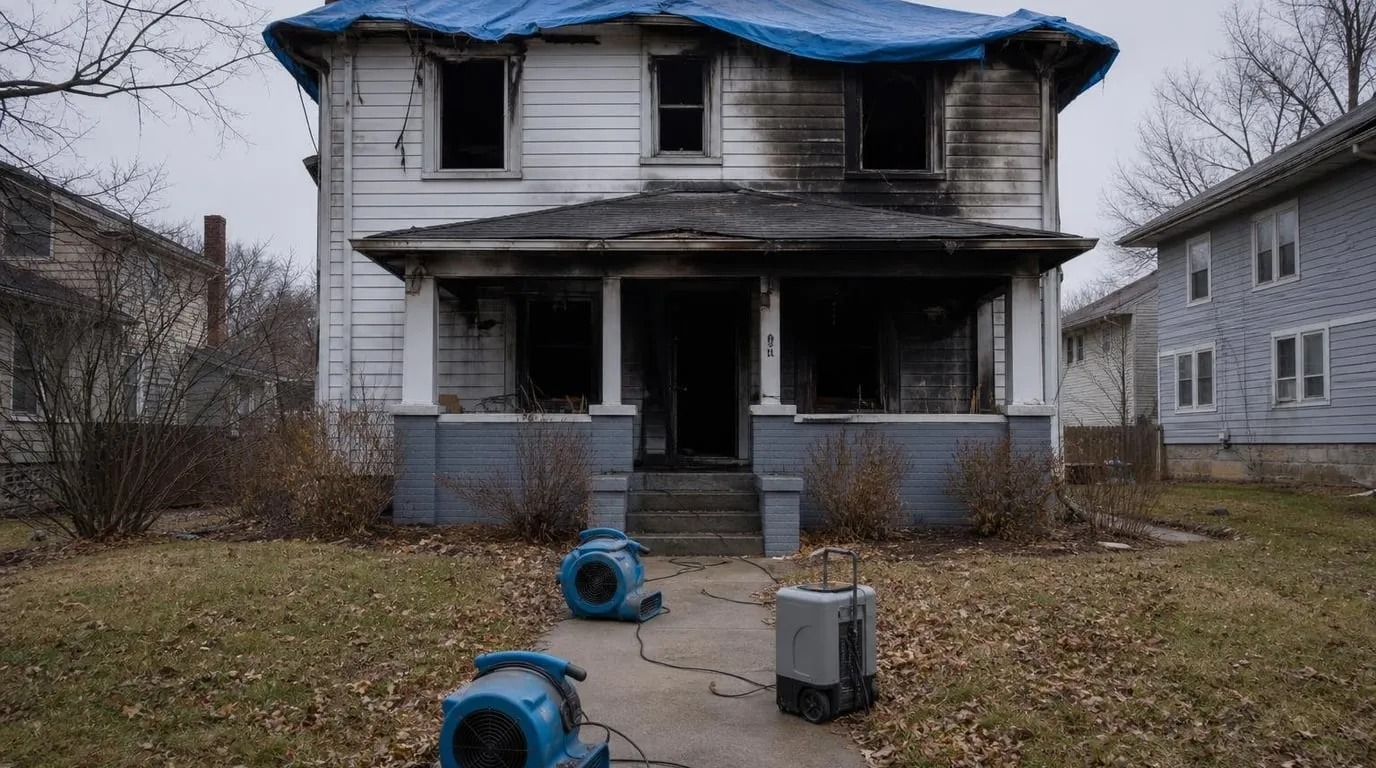
Kansas City fires come with a second adversary: the weather that follows them. A February fire leaves a soaked structure that freezes overnight; a May fire leaves an open roof with a supercell forecast. Four-season fire restoration means the recovery plan starts with the sky.
Quick answer: Fire restoration in Kansas City follows the standard arc (same-day board-up and tarping, suppression-water management, soot and smoke removal, deodorization, rebuild) with seasonal adaptations: temporary heat and freeze protection for winter losses, rapid weatherproofing during storm season, and pre-demolition asbestos and lead testing in the metro’s extensive pre-1980 housing stock.
The Winter Fire Problem
KC’s fire season peaks with the heating season, and winter losses stack damage types:
- Suppression water freezes in wall cavities, on subfloors, and in plumbing within hours. Ice expands, splitting materials the fire never touched, and interior pipes in an unheated fire-damaged house burst on schedule. The dynamics mirror a frozen pipe event layered onto a fire.
- Drying requires heat. Evaporation stalls in a cold structure, so crews establish temporary heat and run desiccant dehumidification to keep the drying process moving.
- Utility isolation must be managed so freeze protection and safety coexist.
A fire crew that tarps, boards, heats, and dries on day one routinely saves winter losses five figures in secondary damage.
Storm Season Fires
From spring through early summer, the priority inverts: get the structure weathertight before the next front. Tornado-alley squall lines put wind-driven rain into any opening, and hail tests every tarp. Storm intrusion gets photographed and folded into the fire claim; the combined-loss handling looks like our storm damage restoration process running parallel to fire scope.
Smoke, Soot, and KC’s Housing Stock
The cleaning scope follows soot type, whether dry, greasy, or protein, and extends house-wide wherever smoke traveled, including ducts. The methodology is covered in our soot cleanup guide and smoke odor removal guide.
The metro’s older neighborhoods, including Brookside, Waldo, the Northeast, and older Wyandotte and Johnson County stock, carry pre-1980 materials: asbestos in plaster, flooring, and duct wrap, plus lead paint. Fire and demolition disturb both, so testing precedes demo. Our environmental testing runs through an in-house lab for fast turnaround.
Insurance on Both Sides of the State Line
Missouri and Kansas policies both treat fire as a core covered peril: structure, smoke, suppression and freeze consequences, contents, and additional living expenses. Prompt board-up matters contractually, since policies require reasonable steps to prevent further damage. Cost benchmarks are in fire damage restoration cost.
Related Services
Bingham Restoration serves the Kansas City metro on both sides of the state line, 24/7. See our fire damage restoration services or call 520-FLOODED.
Frequently Asked Questions
Why do house fires spike in Kansas City winters?
Heating is the driver: space heaters, overworked furnaces, fireplaces and chimneys, and heat tape on pipes. December through February is peak season for KC residential fires.
What happens to suppression water in freezing weather?
It freezes inside the structure, in wall cavities, on floors, and in plumbing. Winter fire losses in KC routinely include burst pipes and ice damage on top of the fire scope, and drying requires temporary heat.
Does insurance cover fire damage in Missouri and Kansas?
Yes, fire is a covered peril on standard policies in both states, including smoke, suppression water and ice damage, contents, and additional living expenses.
Are older KC homes a special concern after fire?
Homes built before 1980, much of the housing stock in KCMO's historic neighborhoods and older Johnson County, may contain asbestos and lead paint that fire and demolition disturb. Testing before demo is standard.
How fast should board-up happen after a KC fire?
Same day. KC weather changes fast in every season, and an open structure invites storm water, freeze damage, and vandalism. Insurers expect prompt securing of the property as part of your duty to mitigate.
Need Emergency Restoration Right Now?
Our crews arrive in 48 minutes on average and bill your insurance directly.
Call 520-FLOODED