
Bingham Restoration Resources
Hail Damage and Hidden Water Intrusion
Published September 23, 2026
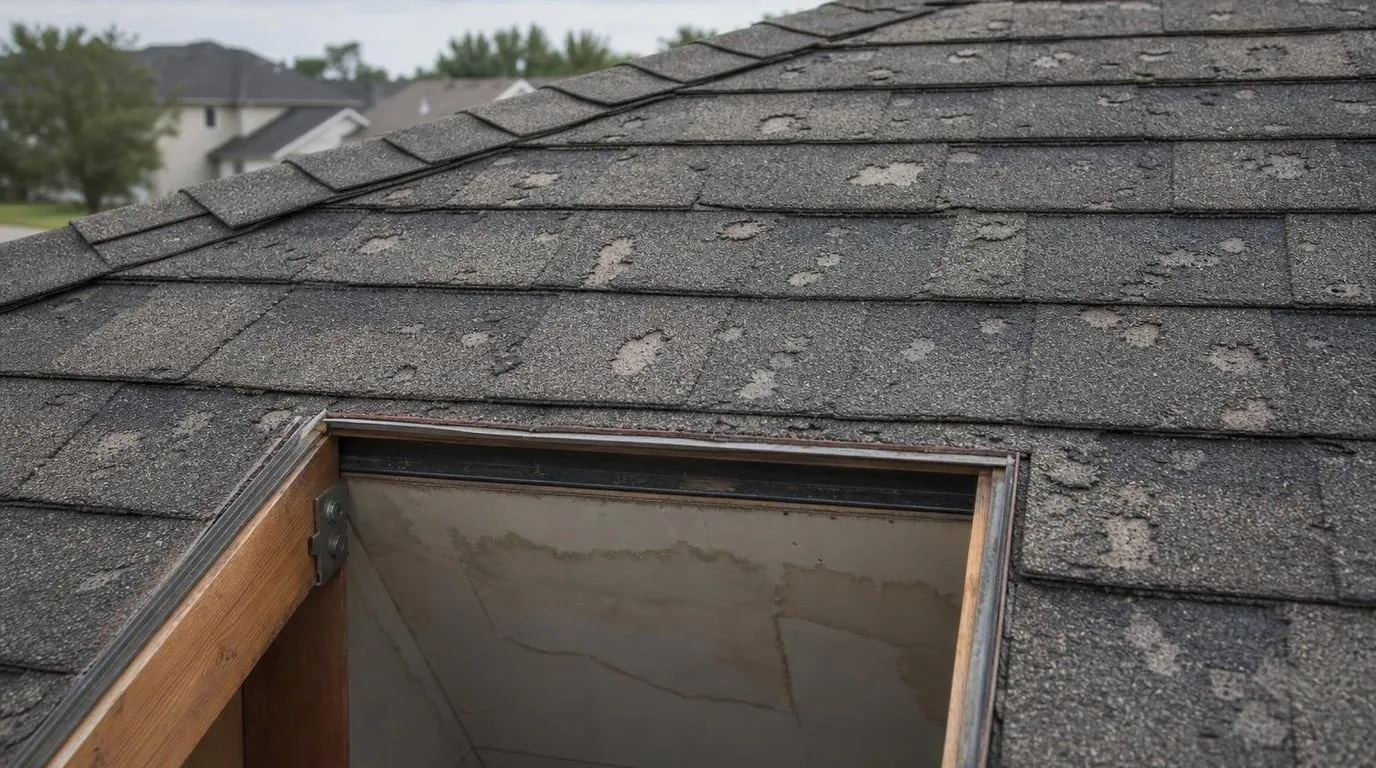
Hail is the delayed-fuse storm peril. The stones that dented your gutters also bruised your shingles, fracturing the fiberglass mat under an intact-looking surface, and those bruises begin leaking on their own schedule: six months, a year, sometimes two. By then, the storm is forgotten, the claim window is closing, and the ceiling stain looks like an ordinary roof leak.
Quick answer: After any significant hail event, document the date and get a roof inspection within weeks, even if nothing leaks. Hail bruising causes delayed leaks, and coverage depends on tying the damage to a documented storm inside your policy’s notice window (often one year). If a stain appears months later, the paper trail you made after the storm is what keeps the interior water damage inside a covered claim.
What Hail Does to a Roof
Hail rarely punches holes. Instead it bruises: the impact fractures the shingle’s reinforcing mat and dislodges the granules that shield asphalt from UV. The shingle keeps shedding water at first, then ages at several times its normal rate at each impact point — cracking, opening, and finally leaking. Metal vents, flashings, and skylights take dents that break seals more quickly.
The ground-level evidence is reliable even when the roof looks fine from below: dented gutters and downspouts, pocked AC condenser fins, torn screens, damaged fence caps, and granules washing into downspout splash blocks after the next rain.
The Delay Problem, and What It Costs
When the bruise finally opens, water enters the deck and attic on the slow, hidden pathway described in hidden water damage signs: wet sheathing, damp insulation, and eventually a ceiling stain rooms away from the entry point. Two compounding losses follow. The structure takes on mold risk in the attic, and the claim weakens with every undocumented month, since insurers must distinguish hail damage from ordinary wear, and time blurs exactly that line.
Hail country homeowners, in metros like Dallas-Fort Worth and Kansas City where this cycle runs annually, do well to treat every serious hail event as a documentation event, regardless of visible damage.
The Playbook
- Record the storm: date, approximate stone size (photo with a coin), and ground-level damage photos the same day.
- Professional roof inspection within weeks. Inspectors mark and photograph bruising by test square, producing exactly the evidence adjusters use.
- File promptly if damage is functional. Notice windows are commonly one year, and earlier claims adjudicate cleaner.
- Repair or replace before the leaks start. The roof decision (repair vs. replacement) follows damage density; either way it beats interior remediation.
- If a leak has already surfaced, address the interior fast with moisture mapping, drying, and attic mold assessment, then connect it to the documented storm in the claim.
Related Services
Bingham Restoration inspects, documents, and restores hail-driven water intrusion from the deck down to the ceiling paint, coordinating with your roofer and insurer. See our water damage restoration services or call 520-FLOODED.
Frequently Asked Questions
Can hail damage cause leaks months later?
Yes, routinely. Hail bruises shingles, fracturing the mat and knocking granules loose, without creating an immediate hole. The damaged spots weather rapidly and begin leaking months to a couple of years after the storm.
How do I know if my roof has hail damage?
From the ground: dented gutters, downspouts, and AC fins, damaged window screens and vents. On the roof: dark bruise spots, granule loss exposing black substrate, and granules accumulating in gutters. A professional inspection settles it.
How long do I have to file a hail claim?
Policies commonly require notice within one year of the storm (some states and policies allow more). Because hail leaks surface late, inspect and document promptly after every significant hail event, even without visible damage.
Will insurance cover interior water damage from an old hail storm?
It gets harder as time passes. Damage tied to a documented, timely-reported hail event is covered; a leak discovered two years later with no storm documentation invites a wear-and-tear denial.
Does hail damage always mean a new roof?
No. Scattered functional damage may mean repair; widespread bruising typically justifies replacement, and adjusters count hits per test square to decide. Matching rules in some states can extend scope.
Need Emergency Restoration Right Now?
Our crews arrive in 48 minutes on average and bill your insurance directly.
Call 520-FLOODED