
Bingham Restoration Resources
Wind Damage Restoration: From Missing Shingles to Rebuild
Published September 21, 2026
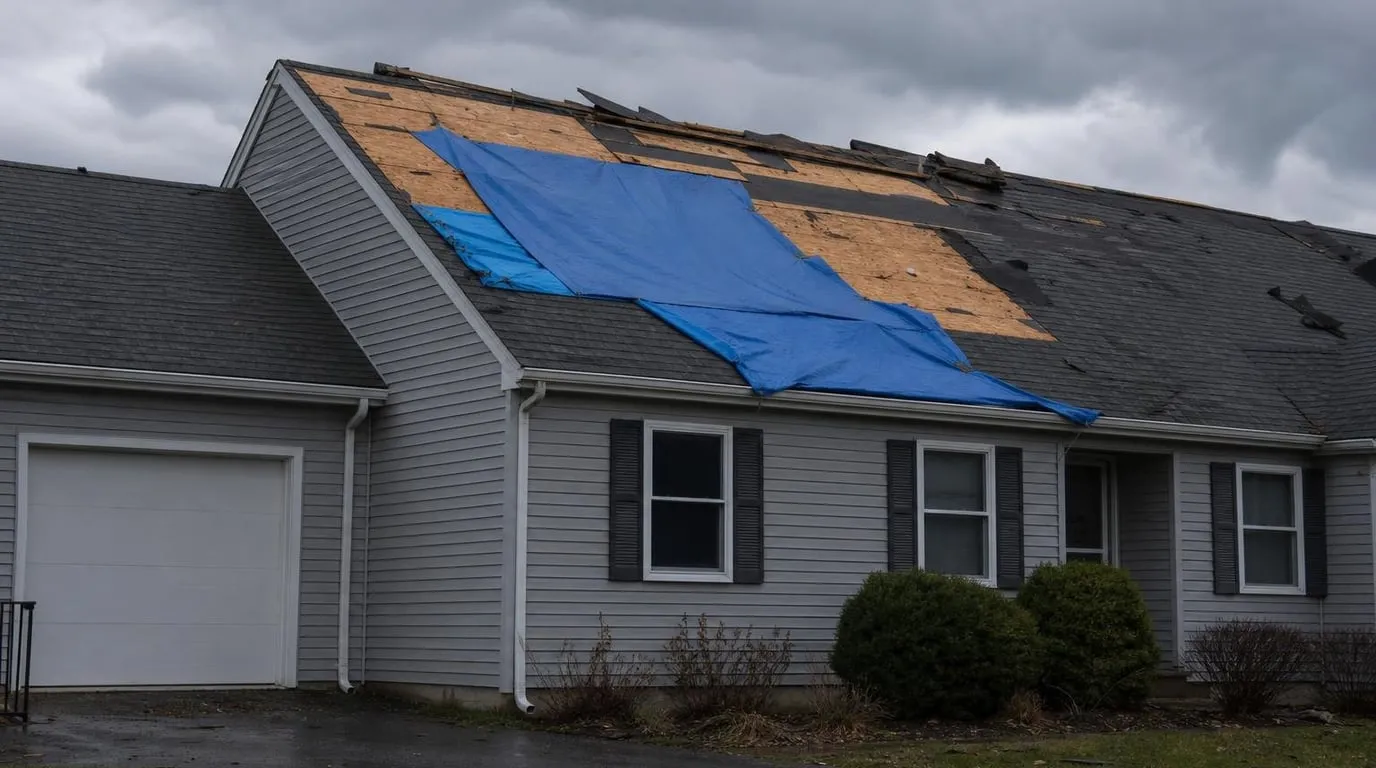
Wind damage runs on a deceptive scale. A tree through the roof announces itself; three lifted shingles and a creased flashing edge do not — and the second kind causes more cumulative water damage than the first, because nobody tarps a breach they cannot see.
Quick answer: After any significant windstorm: photograph the exterior, check the attic for daylight and dampness, tarp confirmed breaches immediately, and get a professional roof inspection even if the ground view looks fine. Wind is a covered peril, and rain entering through a wind-created opening is covered too, but only if the breach gets documented and protected before the next storm compounds it.
How Wind Actually Breaks Houses
Wind loads a house unevenly. Gusts create uplift at roof edges and corners, pressure differentials at ridges, and torsion on everything cantilevered. The characteristic damage follows:
- Shingle uplift and creasing: shingles that lifted and resettled look intact from the ground but have broken their seal strips; the crease is a future leak.
- Flashing displacement at chimneys, valleys, and walls: millimeter gaps that admit wind-driven rain.
- Siding and trim breaches that open wall cavities to moisture.
- Impact damage: branches and debris that puncture rather than merely dent.
- Whole-tree events: structural damage plus a large, immediate opening.
The through-line: most wind damage is a water problem on a delay. The breach happens in the storm; the loss materializes with the next rain, quietly wetting sheathing, insulation, and ceilings until a stain appears. That lag is covered ground in our hidden water damage guide, and it is why post-storm inspection matters even when nothing looks wrong.
The Response Sequence
- Document immediately: date-stamped photos of the house and any debris; the storm date anchors the claim.
- Attic check: daylight through the deck, damp insulation, wet sheathing.
- Emergency tarping and board-up of confirmed breaches. This is covered mitigation, and your policy expects it.
- Professional inspection: roof-level assessment finds the creased shingles and shifted flashing a ground view misses.
- Interior moisture mapping wherever water may have entered, before it becomes a mold problem.
- Permanent repair and interior restoration, scoped together so the claim covers both. The combined exterior-interior recovery follows the arc in storm damage restoration.
The Coverage Distinction That Decides Claims
Insurers separate storm-created openings (covered, including the interior water) from wear-and-tear intrusion (excluded). The same wet ceiling gets paid or denied based on whether a documented wind breach explains it. This makes the first 48 hours of documentation disproportionately valuable: photos, the inspection report tying damage to the storm, and prompt tarping that shows mitigation. Hail complicates the same picture; its hidden-leak dynamics are covered in hail damage and water intrusion.
Related Services
Bingham Restoration handles wind losses end to end: emergency tarping, moisture mapping, insurance documentation, and full interior restoration. See our water damage restoration services or call 520-FLOODED.
Frequently Asked Questions
What counts as wind damage on a homeowners policy?
Wind is a covered peril on standard policies: lifted or missing shingles, flashing failures, siding damage, broken windows, fallen trees, and the interior water damage that follows a wind-created opening.
Why does minor-looking wind damage cause major water damage?
A few lifted shingles or a bent flashing edge breaks the roof's water seal invisibly. The leak appears with the next rain, sometimes weeks later, after water has been entering the deck and attic quietly.
What should I do right after a windstorm?
Photograph everything from the ground, check the attic for daylight or damp sheathing, get breaches tarped fast, and have a professional inspection, because wind damage is frequently invisible from the ground.
Does insurance cover tree fall damage?
Trees falling on covered structures are covered, including removal from the structure. A neighbor's tree on your house is typically your policy's claim; healthy-tree windfall is covered while long-dead neglected trees can be disputed.
Is wind-driven rain covered by insurance?
Rain entering through a wind-created opening is covered. Rain entering through pre-existing gaps or worn materials without storm damage is generally not, which makes documenting the wind breach essential.
Need Emergency Restoration Right Now?
Our crews arrive in 48 minutes on average and bill your insurance directly.
Call 520-FLOODED