
Bingham Restoration Resources
Kansas City Storm Damage: Tornado Alley Restoration
Published September 24, 2026
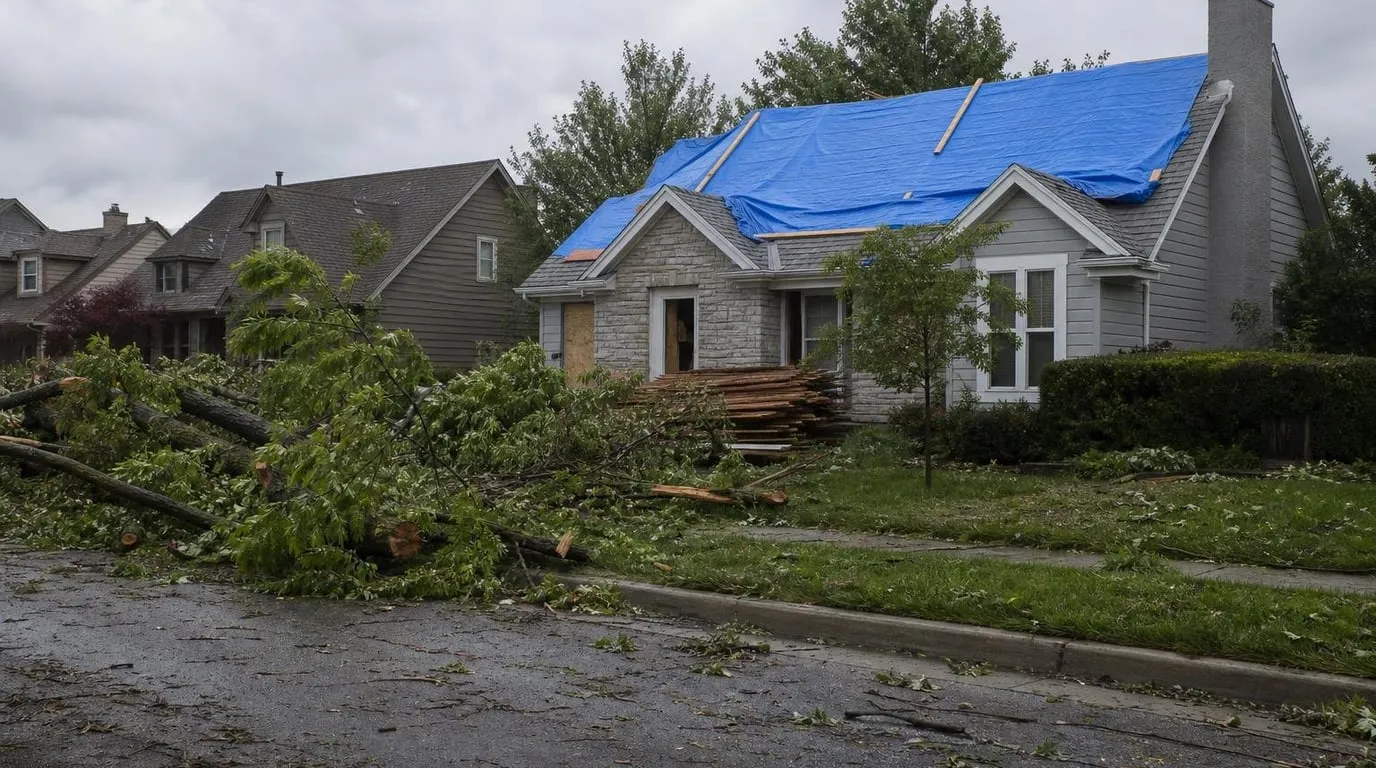
Kansas City sits where Tornado Alley’s supercells meet Midwest humidity, and the metro’s storm menu reflects it: tornadoes, straight-line winds that do tornado-grade damage across wider areas, baseball hail, and rain rates that flood basements on both sides of the state line — sometimes all in the same evening.
Quick answer: After storm damage in Kansas City: stay clear of downed lines and unstable structures, photograph everything before touching anything, get openings tarped and boarded the same day, and start interior water mitigation immediately. Wind, hail, and tornado damage are covered perils on Missouri and Kansas policies; the flooding that accompanies them may need separate coverage, so document the water’s path carefully.
The KC Storm Profile
Tornadoes and straight-line winds. The metro’s severe-weather core. Tornado paths are narrow and catastrophic; derecho-style straight-line winds damage entire quadrants at once, with roofs opened, trees down, and siding stripped. Both create the storm-opening scenario where interior rain damage is covered, per the mechanics in our wind damage guide.
Hail. KC endures multiple damaging hail events in a typical year, and hail’s signature is delay: bruised shingles that leak next spring. The documentation-now, leak-later problem is covered in hail damage and hidden water intrusion.
Flooding. Storm rain over expansive clay soil overwhelms grading, gutters, and sump pumps. Basement flooding rides along with most major KC storm events, a failure chain detailed in sump pump failure flooding, and the water’s origin decides its coverage: through a storm-created opening (covered), rising surface water (flood policy), or backing up through drains (endorsement).
The Response Sequence
- Safety triage: lines down, gas odors, shifted structures mean wait for utilities and officials.
- Document the scene: wide shots and closeups, before cleanup, with the storm date anchoring everything.
- Emergency protection same day: tarping, board-up, and temporary weatherproofing. The next front does not wait, and your policy requires reasonable protection of the property.
- Water mitigation immediately: extraction, moisture mapping, and structural drying wherever rain or flooding entered. Humid KC summers give wet structures no natural recovery window.
- Scope and rebuild: exterior repairs coordinated with interior restoration so the claim resolves as one loss rather than three.
Older-housing note: storm demolition in the metro’s extensive pre-1980 stock can disturb asbestos and lead materials, so testing precedes teardown, the same discipline described in our Kansas City fire guide.
Insurance in Two States
Missouri and Kansas policies treat wind, hail, and tornado as core perils. The disputes cluster on two lines: storm-created opening versus wear-and-tear intrusion (documentation wins this one), and wind-driven rain versus rising flood water (the water’s entry path decides coverage). Photograph the path, not just the puddle. Claim mechanics are covered in filing a water damage claim.
Related Services
Bingham Restoration serves the Kansas City metro 24/7 with board-up, water mitigation, and full rebuild: one crew, one documentation chain, direct insurance billing. See our water damage restoration services or call 520-FLOODED.
Frequently Asked Questions
What storm damage is covered by insurance in Kansas City?
Wind, hail, tornado, and lightning damage are covered perils on standard Missouri and Kansas policies, including interior water entering through storm-created openings. Rising flood water requires separate flood insurance, and sewer backup requires an endorsement.
What should I do first after storm damage?
Safety first: downed lines, gas smell, or structural instability mean stay out. Then photograph everything, get breaches tarped and boarded the same day, and report the claim. Prompt protection of the property is both smart and contractually required.
How fast do restoration crews respond after a major KC storm?
Bingham crews mobilize around the clock with a 48-minute average arrival in normal conditions. After area-wide events, documented emergency mitigation still typically begins the same day, prioritized by severity.
Does hail damage need attention if nothing is leaking?
Yes. Hail bruising causes delayed leaks months later, and claim windows run from the storm date. Inspect and document after every significant hail event.
Who handles the roof vs. the interior after a storm?
Roofers rebuild the roof; restoration companies handle emergency protection, interior water mitigation, drying, and rebuild. A full-service restoration firm coordinates both scopes into one claim.
Need Emergency Restoration Right Now?
Our crews arrive in 48 minutes on average and bill your insurance directly.
Call 520-FLOODED