
Bingham Restoration Resources
Commercial Fire Damage Restoration: Reopening After a Fire
Published October 4, 2026
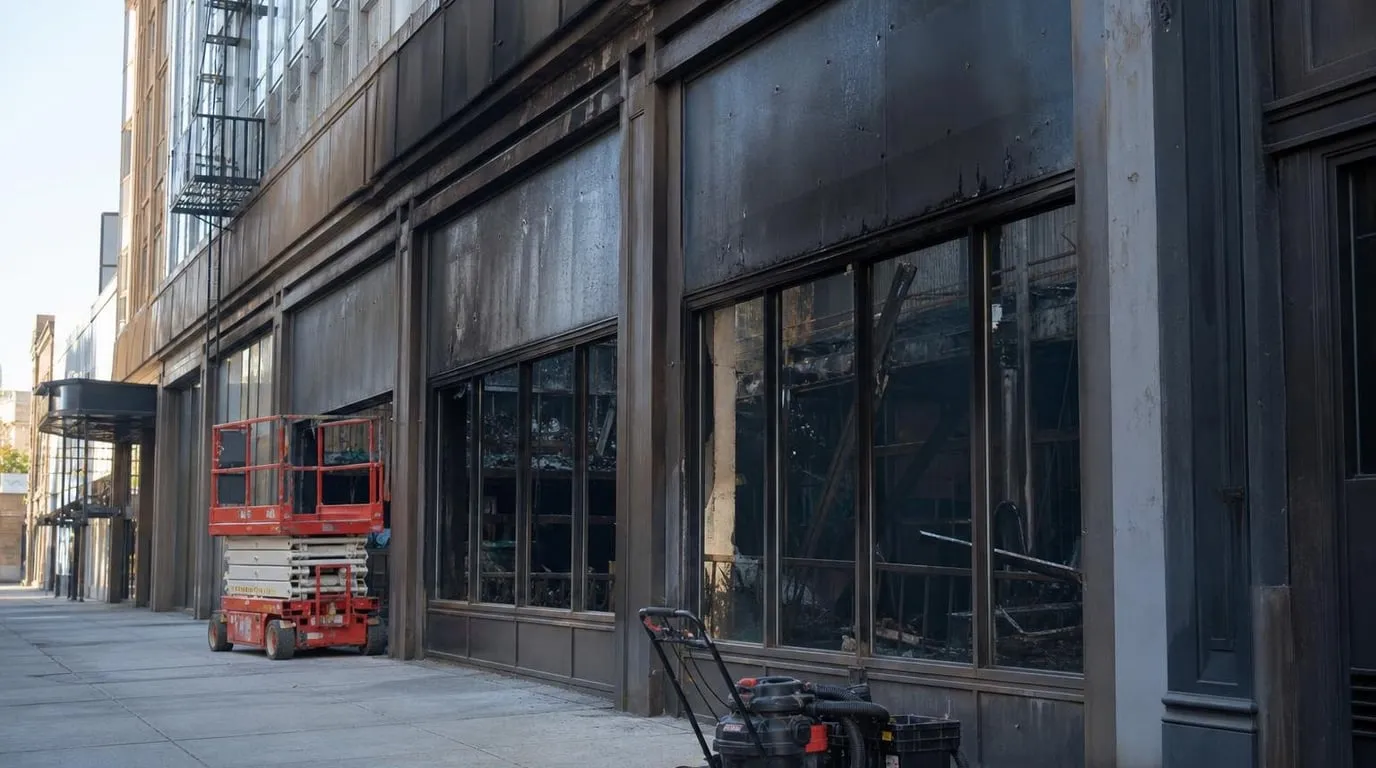
A commercial fire is two disasters running concurrently: the damage to the building and the interruption of the revenue that pays for it. Residential restoration optimizes for making a home whole; commercial restoration optimizes for that plus a reopening date, because every day of the schedule is a day of business interruption someone is counting.
Quick answer: Commercial fire restoration follows the same technical arc as residential (emergency securing, suppression-water drying, soot and smoke removal, deodorization, rebuild), compressed and phased around business continuity. The commercial additions: business interruption coverage that makes speed a financial line item, code-upgrade exposure on rebuild, tenant/landlord scope splits, and the option of partial operation behind containment. Choose a contractor who plans the reopening, not just the repair.
What Changes at Commercial Scale
The clock is monetized. Business interruption coverage replaces income during restoration, but limits run out and customers drift. Restoration decisions about cleaning versus replacing, phasing, and overtime crews get made against the revenue math, not just the repair estimate.
Phased reopening is often possible. Containment barriers with negative air can isolate the damaged zone while the rest operates: a restaurant dining room while the damaged storage wing is rebuilt, or three retail bays while the fourth is gutted. This is engineering, not improvisation: air management keeps soot and odor out of occupied areas, per the same discipline used in smoke odor elimination.
Code and compliance stack up. Commercial rebuilds trigger current code requirements for sprinklers, accessibility, electrical, and sometimes seismic work. Only ordinance-or-law coverage pays those upgrades. Health-regulated businesses (food service, medical) add reopening inspections to the critical path. These items, not demolition, most often set the timeline.
Stakeholders multiply. Landlord and tenant policies split structure from improvements and contents; documenting which scope belongs to which policy early prevents the mid-project stall. The claim itself scales up the same fundamentals covered in our fire insurance claims guide.
The Recovery Sequence
- Secure and assess: board-up, structural evaluation, utility isolation, and a same-week reopening plan with phasing options.
- Water first: suppression water is the fastest-moving damage; commercial drying follows the standard structural drying process at scale.
- Corrosion triage: acidic soot attacks equipment, electronics, and inventory progressively; cleaning priorities follow value and vulnerability, as in soot cleanup.
- Contents and inventory: assessed, documented, and processed restore-versus-replace, feeding the stock claim.
- Deodorization and rebuild, sequenced by the reopening plan, with inspections scheduled ahead rather than discovered behind.
The parallel water-side playbook, downtime math included, is covered in commercial water damage.
Choosing the Contractor
Ask three questions: Can you show a phasing plan that keeps part of this business open? Do you document to commercial claim standards, including business-personal-property scope? Have you managed code-triggered rebuild with ordinance-or-law coverage? A contractor fluent in those answers is planning your reopening; one who is not is planning a construction project that happens to contain your business.
Related Services
Bingham Restoration handles commercial fire losses end to end, from emergency response through phased restoration and direct coordination with all policies on the loss. See our fire damage restoration services or call 520-FLOODED.
Frequently Asked Questions
How long does commercial fire restoration take?
Smoke-only events can reopen in days to two weeks. Significant fires with structural repair typically run 2 to 6 months, driven by scope, permitting, code upgrades, and inspection schedules. Phased reopening often shortens the revenue gap.
What is business interruption insurance and does it apply?
It replaces lost income and covers continuing expenses (rent, payroll, utilities) while fire damage keeps you closed. It typically runs from the loss through the restoration period, making restoration speed a direct financial variable.
Can part of a business stay open during fire restoration?
Frequently, yes. Containment barriers, negative air, and phased work zones let unaffected areas operate while restoration proceeds, a plan worth demanding from any commercial restoration contractor.
What happens to inventory and equipment after a commercial fire?
Smoke-affected inventory gets assessed for restoration versus loss; equipment and electronics undergo corrosion-arresting cleaning quickly, since acidic soot destroys them progressively. Documentation feeds the contents and stock portions of the claim.
Why do code upgrades matter in commercial fire claims?
Rebuilding triggers current code requirements for accessibility, fire suppression, and electrical systems. Those upgrades are only paid by insurance if you carry ordinance-or-law coverage. It is the most common expensive surprise in commercial fire recovery.
Need Emergency Restoration Right Now?
Our crews arrive in 48 minutes on average and bill your insurance directly.
Call 520-FLOODED